

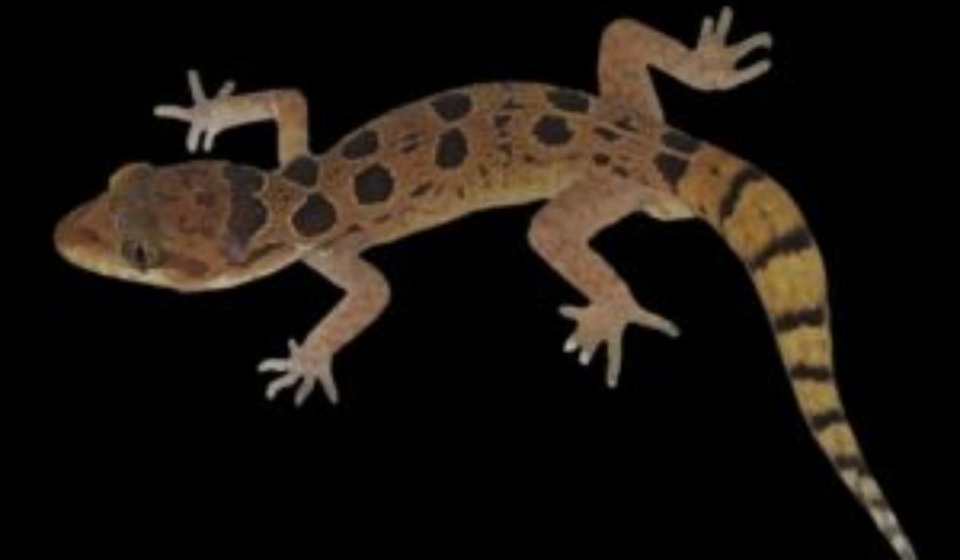


An elusive lizard thought to live only in India makes an appearance in Nepal
Published on Mongabay
Leopard occupancy correlates with tiger and prey occurrences in the Parsa-Koshi Complex, Nepal
Authors: H. B. Katuwal, B. P. Bhattarai, S. Regmi, S. Bhandari, A. K. Ram, B. Aryal, K. Tamang, S. Kc, A. Nepali, D. Adhikari, S. Koirala, B. D. Baral, S. Devkota, R. Gautam, D. N. Mandal, J. L. Belant, H. P. Sharma, R.-C. Quan
Abstract: Large carnivores such as leopards (Panthera pardus) experience continuing threats from habitat loss and fragmentation, depletion of prey populations, and retaliatory killing following conflicts with humans. We aimed to identify factors affecting leopard occupancy and temporal overlap between leopards and tigers (P. tigris), their major prey, and human activities in the Parsa-Koshi Complex (PKC), Nepal. We deployed 154 cameras for 21 days each along wildlife trails throughout PKC during December 2022–March 2023. We found low leopard occupancy (0.17 ± 0.04) in PKC, with greater occupancy rates within protected areas, particularly in Parsa National Park and its buffer zone. Human (63.10 ± 23) and livestock (36.46 ± 102) detections were higher across the PKC. Leopard occupancy was positively associated with the presence of tigers and prey. Temporal overlap was moderately high between leopards and tigers, as well as between leopards and their prey. Our research suggests that coexistence between leopards and tigers is likely largely facilitated by higher prey availability, which may reduce competition. Further, we demonstrate that maintaining forest cohesion can improve habitat for leopards. Intensifying use of agricultural areas could reduce forest fragmentation and increase leopard habitat overall, in turn reducing leopard depredation of livestock and improving leopard-human co-existence and conservation.
DOI: https://doi.org/10.1111/jzo.13251
Journal: Journal of Zoology
Paper link: https://zslpublications.onlinelibrary.wiley.com/doi/10.1111/jzo.13251
Dipendra Adhikari Memorial Conservation Grant Result Announcement
With Reference to notice announced on 11 November, 2024 for the student research proposal for “Dipendra Adhikari Memorial Conservation Grant” announced by Nepal Conservation and Research Center; this is to notify that the following candidate has been selected for the grant:
| S.N. | Name of the candidate | Affiliation | Research Topic | Level |
| 1. | Ritika Pathak | Golden Gate International College, Kathmandu | Habitat Selection and Diet Composition of Striped Hyaena in Deukhuri Valley, Dang, Nepal | M.Sc. |
| Candidate in waiting | ||||
| Roshani Acharya | Degree Campus, Department of Zoology. Biratnagar | Studies on proximate composition of some small indigenous fish species of Singhiya and Keshaliya Rivers of Morang district, Nepal | M.Sc. | |
The above successful candidate is requested to contact Nepal Conservation and Research Center (at ncrc.research@gmail.com) within 15 January 2025. If the successful candidate is not able to contact, then the candidate in waiting list will be awarded.

Declaration: This memorial grant was possible from generous support of Dipendra’s friends and conservationists from Nepal and abroad. NCRC would like acknowledge all the supporters to make this happen.