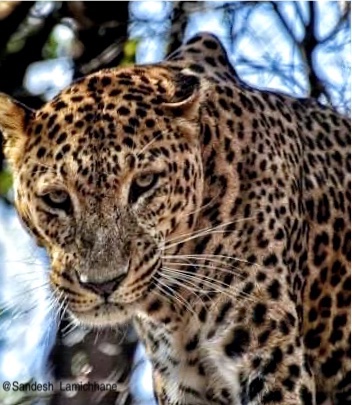


Ecology and Conservation of Common Leopard (Panthera Pardus)

Need for Human-Leopard Co-existence in and around Annapurna Conservation Area, Nepal.

Project highlight

Principal investigator: Saurav Lamichhane

Location: Annapurna Conservation Area, Nepal

Grant support: The Rufford Foundation

Team members: Tank Rawal, Kabita Das

Nepal’s mid-hill ecosystem includes a top predator, the leopard, and a significant source of human-wildlife conflict. To put successful conflict management strategies into practice, it is crucial to have every aspect of information about conflict species. This project is a continuation of previous Rufford work. Understanding the social, as well as ecological dimension of human-wildlife conflict is important for effective conflict management strategies. In the first Rufford grant, our study was entailed mainly to understand the social dimension of HLC along with conservation awareness activities in local community. In this project, our major focus will be identifying the ecological correlates such as occupancy and diet composition of conflict species.

The following objectives guide the project:

  1. Information on common leopard occupancy and associated covariates will be obtained.
  2. The diet composition of the common leopard will be understood, thereby the livestock contribution in the diet as well.
  3. Knowledge of local herders on leopard conservation and HLC mitigation measures will be improved.
  4. School children will be made aware on leopard conservation and conflict mitigation measures.
  5. Findings of the project will be disseminated to the conservation authorities with far-reaching implications for the conservation of common leopards in the area.

The project’s findings are anticipated to contribute to more efficient efforts in reducing HLC and fostering coexistence between humans and leopards. Moreover, the conservation awareness program to the local herders and school children and knowledge gap addressed by this project will be crucial for better human-leopard co-existence in the area. To sum up, this research project will be crucial for the conservation of common leopards in the area. The data obtained will be crucial for conservation authorities to effectively plan conflict management strategies, and in particular to increase the knowledge and awareness among the local herders on leopard conservation while minimizing the conflict.

Project link :

Hyna (कुचिकार )

हेलामा परेको प्रकृतिको कुचिकार ‘हाइना’

काठमाडौँ – अमेरिकाको विस्कन्सिन-म्याडिसन विश्वविद्यालयबाट बाघबारे अध्ययन गर्न आएकी सामन्था हेलेले दाङ र बाँकेको राप्ती नदीको छेउछाउ तथा जंगल नजिकका बस्तीमा ३२ वटा क्यामेरा राखिन्। बाघका लागि राखिएको क्यामेरामा उनले नसोचेको हाइना पनि देखिए। अनि उनले आफ्नो इन्ष्टाग्राममा हाइनाको तस्बिर राख्दै लेखिन्:

हाइनाज्नेपालमाहो !


हामीले हाम्रो क्यामेरामा स्ट्राइप भएका बाघहरू मात्र  कैद गरेका छैनौँ।

स्ट्राइप हाइना धारीदार हाइना (ह्याना हाइना) नेपालमा अत्यन्त दुर्लभ र लोपोन्मुख छन्। यो अनुमान गरिएको छ कि देशभरि १०० भन्दा कम हाइनाहरु छन्।

यी जनावरहरूलाई क्यामेरामा कैद गर्नु एकदमै गज्जबको खुसी हो!

‘म हाइनाबारे जानकार होइन तर मैले बाघका लागि राखेका अधिकांश क्यामेरामा हाइना परेको छ,’ उनले भनिन्, ‘मैले पूर्ण रुपमा क्यामेरा अध्ययन त गरेको छैन तर १२ वटा जति हाइना मेरो क्यामेरा पेरका छन्।’

बाघमा विद्यावारिधि गरिरहेकी हेले करिब ५ महिनादेखि नेपालमा छिन् र चितवन, नवलपरासी, दाङ, बाँकेलगायतका क्षेत्रलाई आधार बनाएर बाघको आनीबानी अध्ययन गरिरहेकी छन्।

नेपालमा स्ट्राइप हाइनाको संख्या यति नै छ भन्ने तथ्याङ्क त छैन तर बढेको अनुमान गरिएको छ। पछिल्लो समय विभिन्न ठाउँमा हाइनाको मुभमेन्ट देखिने गरेको छ, जसको पुष्टि सामन्था हेलेले राखेका क्यामेरामा परेको संख्याले गरेको छ।

नेपालमा कहाँ–कहाँ भेटिएका छन्?


Source : https://deshsanchar.com/

Chilapata rain-pool frog

Chilapata rain-pool frog spotted for the first time from Nepal

NCRC’s team members have recorded a new frog species for Nepal from Morang district and Barandabhar corridor forest, Chitwan, Nepal. The frog known as Chilapata rain-pool frog (Minervarya chilapata), the name Chilapata rain-pool frog has been given to this species because it was described from Chilapata Reserve Forest of West Bengal, India.

Chilapata rain-pool frog

Chilapata rain-pool frog from Morang, Nepal. Photo: Bivek Gautam

The physical appearance and characters on the body of the frog with brown backed body with golden whitish mid dorsal line, upper lip of the frog with white line and belly part whitish and side part of body with black stripe made this frog different from other known Minervaryan frogs from Nepal. On closer look, the whitish vocal sac also differed from all other known species.   After careful observation, physical and measurement of the body parts and call analysis of the male frogs, it turned to be a new species record for Nepal and confirmed to be Chilapata rain-pool frog.  Recently, the observation of this frog has been published in the journal Herpetozoa by the team members Bivek Gautam (BRCS) and Santosh Bhattarai. For full paper, click on the (Link)

Softshell_Turtle

A success story: Eggs hatching and release into the wild of an Endangered Narrow-headed softshell turtle from Chitwan, Nepal.

Chitwan National Park is famous for rhinos and tigers, hold second largest population of Greater one-horned rhino in the world and known as ‘rhino land’ as this park hosts highest number of Greater one-horned rhinos and tigers in Nepal. The occurrence of highly charismatic species such as rhinos and tigers have received conservation attentions by park authorities and other conservation agencies. The conservation interventions only for these charismatic species have kept other species such as turtle into “shadow”. A recent study on “Notes on sucessful Nest Relocation of Chitra indica (Gray, 1831) from Chitwan National Park, Nepal” by Bed Bahadur Khada, Saneer Lamichhane and NCRC team member Santosh Bhattarai highlights the conservation actions needed for and Endangered turtle species, Narrow-headed softshell turtle.

Chitwan National Park experiences irregular floods every year. The construction of dyke on the bank of the river towards village side to save buffer zone villages of the park and excavation of riverbed materials (such as sand, gravel, stone etc) have changed the habitat of aquatic animals such as turtles and crocodiles and has limited the safer nesting grounds for such aquatic animals. The team observed three nests of Narrow-headed softshell turtle in flood prone inundation zone in the Rapti river of Chitwan National Park.

Figure 1. Nest of Narrow-headed softshell turtle in Rapti river, Chitwan National Park. Photo: Bed Khadka

The team relocated safely collected 496 eggs from three nests from the riverbank and relocated to the safer site with same size and dimension nests. The eggs incubated and hatched in seminatural condition and hatchlings emerged in 54 ( averaged days for three nests).

Figure 2. Hatchlings from relocated nest. Photo: Bed Khadka

Out of 496 eggs, 375 hatchlings were safely released in the wild in the Rapti river of Chitwan National Park. The successful eggs collection, hatching in safer site and release into the wild is a success story of and Endangered turtle species to send back the hatchlings in their original home. However, its is and indicative that there is many actions awaiting to safeguard the nesting and breeding habitat of turtles and other aquatic habitat. Park authorities and tiger and rhino centric conservation agencies should implement integrated conservation steps.

Figure 3. Hatchlings of Narrow-headed softshell turtle after release into the wild in Rapti river. Photo: Bed Khakda

A new lizard for Nepal spotted

A new lizard for Nepal spotted from Nepal’s “FORGOTTON TIGER LAND

NCRC’s team members have recorded a new lizard species for Nepal from Chure hills of Morang district, Nepal. The lizard known as Sikkim grass lizard (Takydromus sikkimensis), the name Sikkim has been given to this species because it was discovered from Sikkim in 1888. The researchers are worried for its conservation because it is already categorized as Endangered by IUCN.

Figure 1. Sikkim Grass lizard from Miklajung Morang. Photo: Bivek Gautam

During biodiversity survey in Chure range of Miklajung Morang, a team of researchers from Biodiversity Research and Conservation Society and Nepal Conservation and Research Center spotted a lizard which was not previously encountered by them. The physical appearance of the lizard with brown upper body parts and greenish coloration on mouth and underparts stroke in mind of the team “this is something which never been reported before from Nepal”. On close observation and after measuring the body parts and counting the physical characters of the body, the lizard turned to be a new species record for Nepal and known as Sikkim grass lizard (Takydromus sikkimensis); previously thought to be found only in the state of Sikkim, India (hence the species name is named as sikkimensis). Recently, the observation of this lizard has been published in the journal Herpetozoa by the team members Bivek Gautam, Santosh Bhattarai and Ram Chandra Kandel ( link).

The lizard is a diurnal species which becomes active during the daytime. The lizard was first spotted from upper Chure region of Miklajung Mornag from Schima-Castonopis mixed forest. Although the new record has been published from Miklajung Morang, “We later spotted this species from Panchthar and Ilam districts during our other herpetofauna expeditions” Said Bivek Gautam. The lizard has already been listed as Endangered in the IUCN Red List due to human induced survival threats to the species.

The lizard was spotted approximately 100 km west from its previously reported location in Sikkim, India. “The habitat we recorded in Nepal is also facing same grave threat for the survival of the lizards, the Chure hills in Nepal is most vulnerable landscape in Nepal with unregulated resource extraction” said Santosh Bhattarai, herpetologist from Nepal Conservation and Research Center. Bhattarai also added “Even Nepal’s tiger centric conservation efforts by the Government of Nepal and conservation organizations have overlooked the conservation potential of Chure/Sivalik hill ranges. Therefore, this hill range is also sometimes termed as “Forgotten tiger land” by the tiger experts of Nepal”. The efforts should be made for regular monitoring of the biodiversity of the Chure hills of Nepal and biodiversity rich areas should be taken into account for conservation and management.

Some media coverage about the Sikkim Grass Lizard (In English)

Some media coverage about the Sikkim Grass Lizard (In Nepali)